
About three months into working from home full time, my lower back started talking to me every afternoon. Not the sharp kind of pain that sends you to a doctor. The dull, grinding kind that makes you shift in your chair every twenty minutes and stand up at every meeting you can. I figured my chair was the problem. It was a mid-range task chair I'd bought five years ago, nothing special. I started building a case for replacing it.
I had a tab open to a $389 ergonomic chair that had good reviews and a name I couldn't pronounce. I kept going back to it. I'd convinced myself that the chair was broken and only a better chair would fix things. My wife looked at that tab and said, "Did you try a cushion first?" I gave her the look that husbands give when they think they've already thought of something but actually haven't. I hadn't tried a cushion.
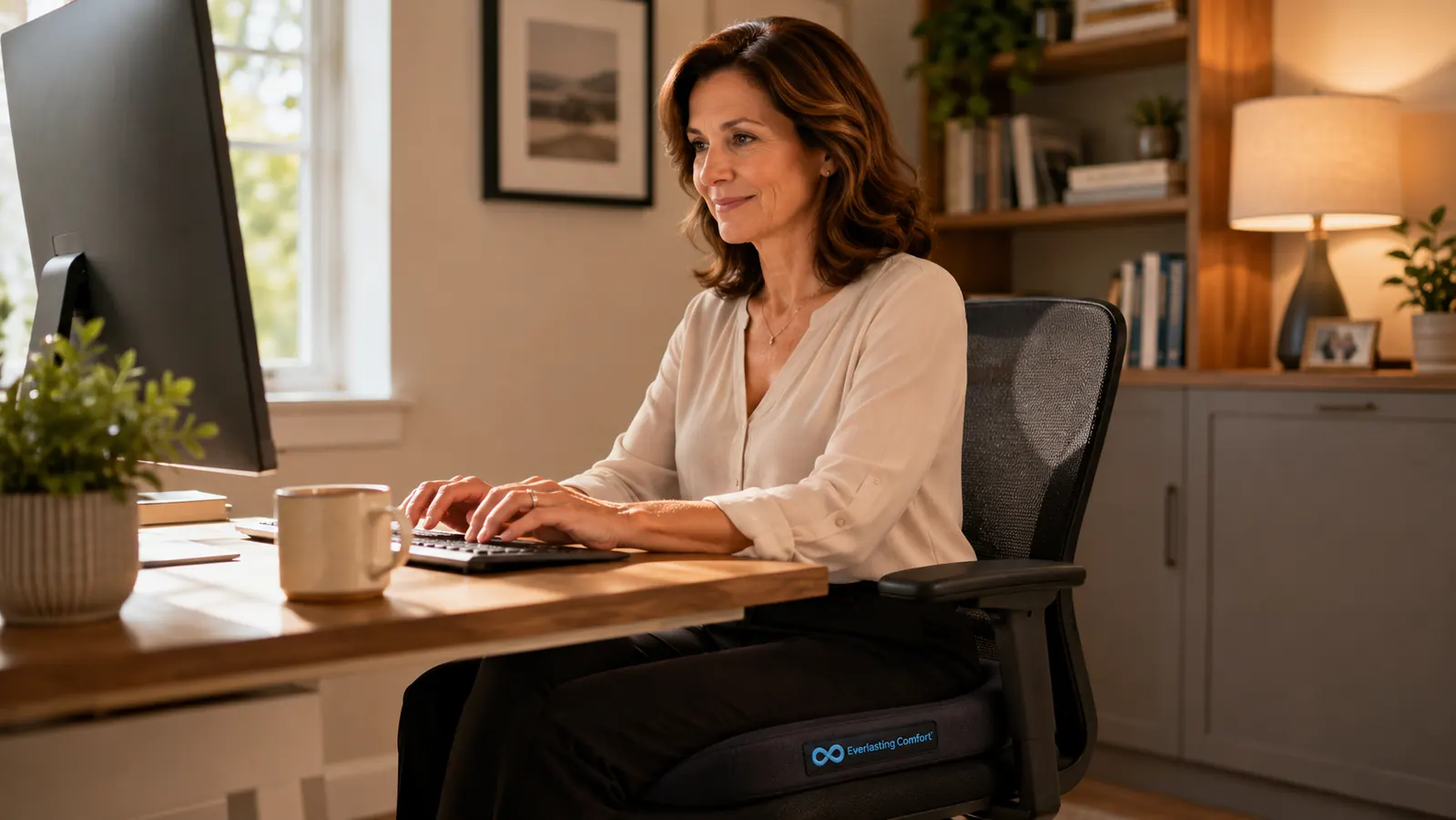
So I did a half-hour of reading instead of buying the chair. The Everlasting Comfort memory foam seat cushion kept coming up. It has over 123,000 reviews on Amazon. The top ones weren't written by people upgrading good chairs. They were written by people in my exact situation: decent chair, bad back, didn't want to spend $400 to find out if the chair was actually the problem. The cushion is the test before the big purchase. That reframe is what sold me.
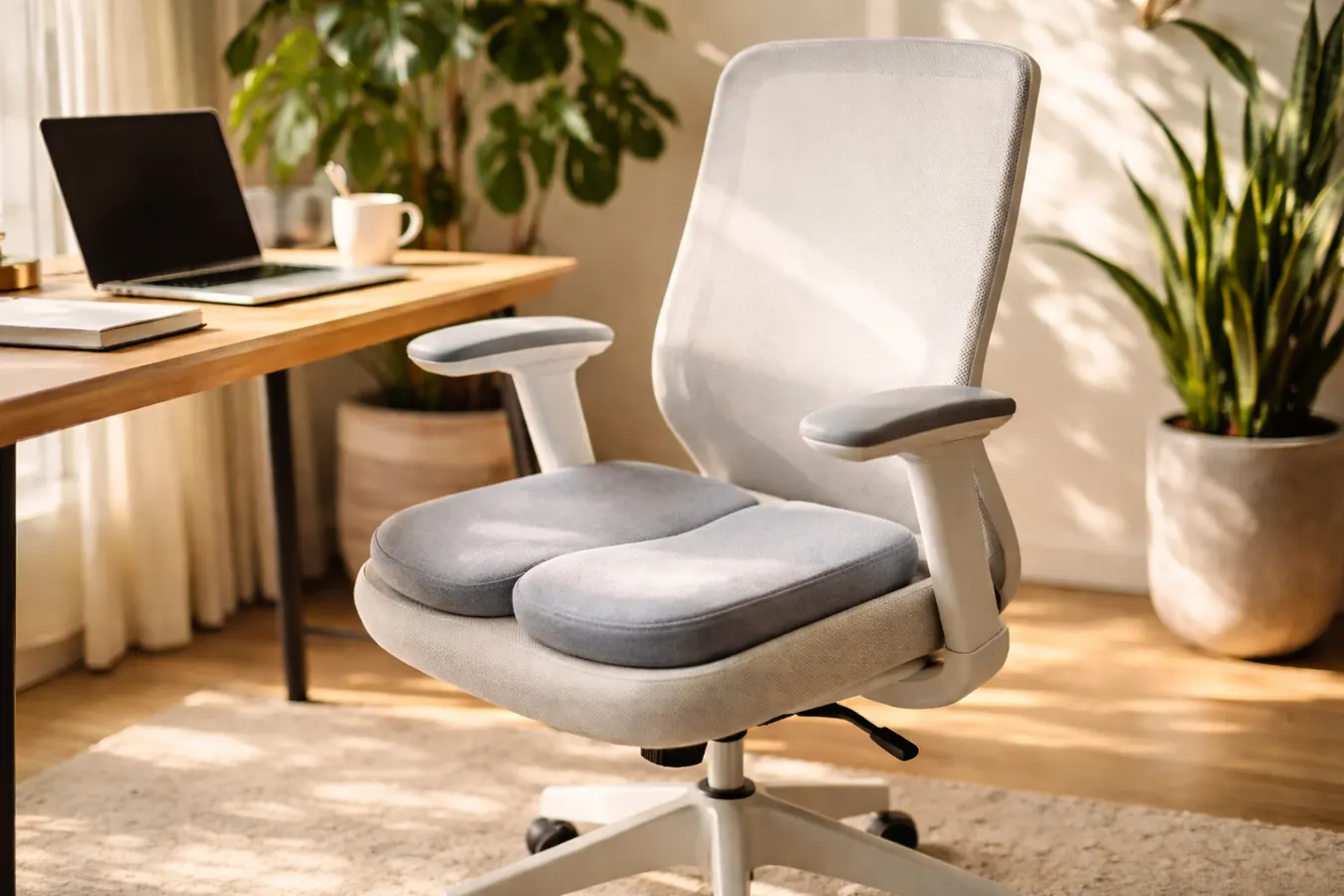
I ordered it and it arrived the next day. Pulled it out of the box and the first thing I noticed was how dense it felt. Not stiff, just solid in a way that cheap foam isn't. The U-shaped cutout at the back is there to take pressure off your tailbone and coccyx while you sit. I'd been sitting on a flat seat pan for five years and didn't realize how much that matters until I sat on something designed differently.
My wife asked if I'd tried a cushion before buying the new chair. I gave her the look that means I hadn't thought of that. She was right.
If your back hurts by 2pm, try the cushion before you try a new chair.
The Everlasting Comfort seat cushion is what 123,000 people reached for before making a bigger call. It costs a fraction of a new chair and takes about thirty seconds to set up. If it works, you just saved yourself a few hundred dollars. If it doesn't, you haven't lost much.
Amazon Check Today's Price on Amazon →
The first week I kept waiting for something to disappoint me. It didn't slide around, which I expected it would. There's a non-slip cover on the bottom that grips the seat pan and it genuinely stays put, even when I'm leaning forward over my keyboard. The memory foam conforms after the first few sits. By the end of week one it had shaped itself to my weight distribution in a way that my flat chair seat never did.
The back pain didn't vanish overnight. That's worth saying clearly. The first week it was about the same. But I stopped shifting in my chair as much. By week two, the grinding-by-2pm feeling had faded noticeably. By the end of week three I realized I had gone a whole day without thinking about my back at all. That hadn't happened in months. The chair I'd almost spent $389 on was still in a tab I eventually closed.

A few things I want to be straight about. The cushion is not a fix for a chair that's structurally wrong for your body. If your armrests are at the wrong height or your lumbar support is genuinely missing, this won't cover for that. It also won't help much if the real issue is that you sit for nine hours without ever getting up. I still stand and stretch a couple of times in the afternoon. But for the specific problem of a flat seat that's putting pressure on your tailbone and lower spine, this is a very direct solution.
I've also had people ask me if I'd recommend it for a standing desk stool or a hard dining chair used as a desk chair. Yes to both. I've used it on a wooden dining chair for a weekend work session and it made a noticeable difference in about twenty minutes. If you work at a kitchen table or a non-ergonomic desk chair and your back is complaining, this is exactly where it earns its keep. You can read more about the full cushion breakdown in my detailed Everlasting Comfort review, and if you're still on the fence, the 10 signs you need a better cushion piece might tell you whether your chair actually needs one.
What I'd Tell You If We Were Sitting at My Kitchen Table
Here's what I'd actually say if you were sitting across from me asking whether to buy a $400 chair or try a $58 cushion first. Start with the cushion. Not because the chair doesn't matter. It might. But you don't know yet whether the problem is the chair or just the seat pan. The cushion tells you in about two weeks. If your back is still miserable after two weeks on a proper memory foam cushion, then yes, you probably need a new chair and the cushion won't change that. But most people I've talked to who made this same swap found out their chair was fine all along. They just needed something between them and the seat that was actually designed for eight hours of sitting. That's it. It's not a complicated answer. It just costs less than the complicated one, which is why it's easy to overlook.
One purchase that either fixes the problem or tells you what will.
The Everlasting Comfort cushion with its memory foam and tailbone relief cutout is the lowest-risk move you can make before committing to a new chair. Over 123,000 people bought it for exactly this reason. Check today's price and see if it's still under $60.
Amazon Check Today's Price on Amazon →