
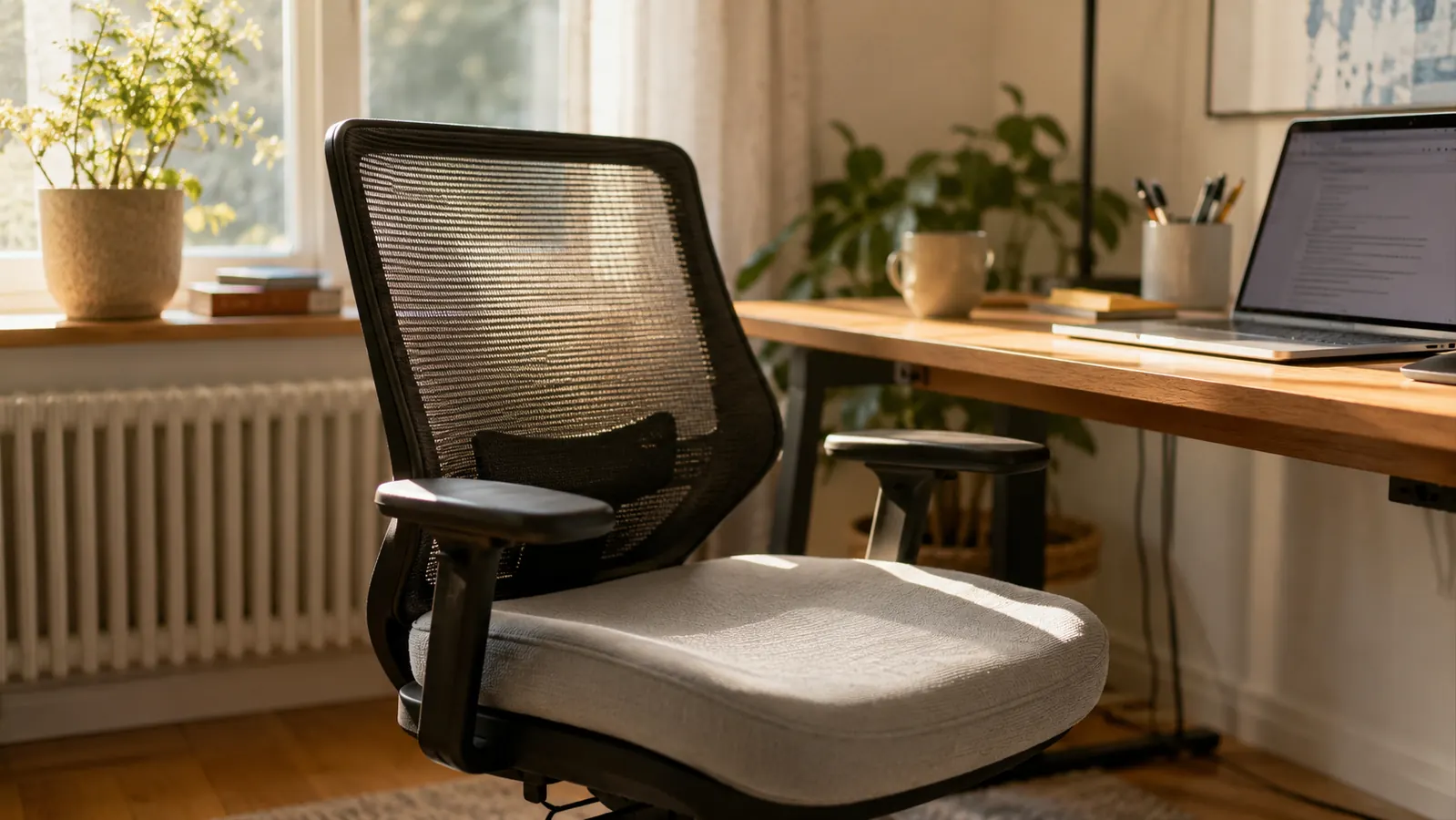
My home office chair is a budget mesh chair I bought three years ago. It was fine at first. By year two, the seat pan started feeling like a park bench by 2 p.m. I tried a folded blanket. I tried adjusting the height. Then I ordered the Everlasting Comfort memory foam seat cushion on a Tuesday afternoon and put it on the chair the next morning. That was 60 days ago. I have used it every single workday since. Here is what I found.
The Everlasting Comfort cushion has 123,036 Amazon reviews. That number stopped me cold when I first searched for seat cushions. It is not a product with a few hundred reviews you can explain away as a launch push. That many real buyers have something to say. But mass-market popularity and daily comfort for a specific person with a specific chair are two different things. So I ran my own test, and this is my honest report.
The Quick Verdict
A well-made memory foam cushion that genuinely reduces tailbone and sit-bone pressure for most seated workers. Not a substitute for a properly adjusted ergonomic chair, but a meaningful upgrade over a bare seat pan at a fraction of the cost.
Amazon Check Today's Price →Still sitting on a hard seat pan? Here is the fix most remote workers reach for first.
The Everlasting Comfort cushion has 123,000+ reviews and a coccyx cutout design built specifically for all-day desk work. Check the current price and availability on Amazon.
Amazon Check Today's Price on Amazon →How I Used It Over 60 Days
My setup is simple. I work at a 55-inch wood-grain desk, eight hours a day, five days a week. The chair is a generic mesh task chair, no name brand, bought from a warehouse store. The seat pan is flat with minimal padding and a firm plastic shell underneath. By the time I started this test in late April, I had developed a pattern of getting up every 45 minutes just to stop the ache at the base of my spine. Not a sharp pain, more of a dull grinding pressure that made it hard to stay focused through long Zoom calls.
I placed the Everlasting Comfort cushion directly on the chair seat, lined up the rear U-shaped cutout with the back edge of the chair, and sat down. I did not strap it down the first week to see whether it would shift. It shifted a little on day one, then I started using the non-slip bottom strap and that solved it entirely. I tracked my get-up frequency for the first two weeks and then stopped when the pattern was clear enough to report honestly.
Over the full 60 days I used the cushion at home, took it to a co-working space twice, and used it on a long flight in week six. I also let my wife try it on her Steelcase Leap (a premium chair) for two full weeks to see whether it added anything on an already-premium seat. I will get to those results in a later section.
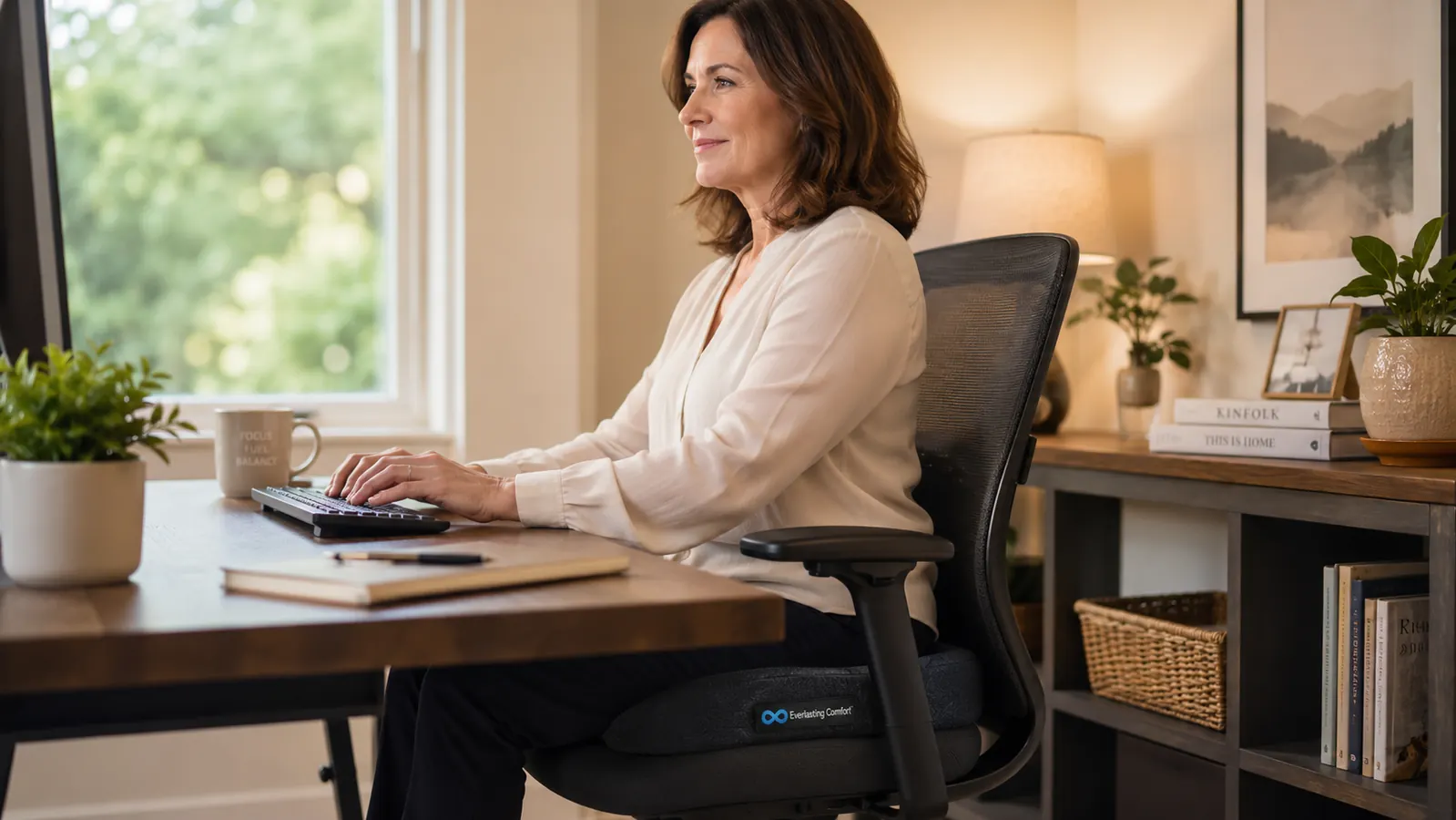
The Memory Foam: What It Does and How Long It Stays That Way
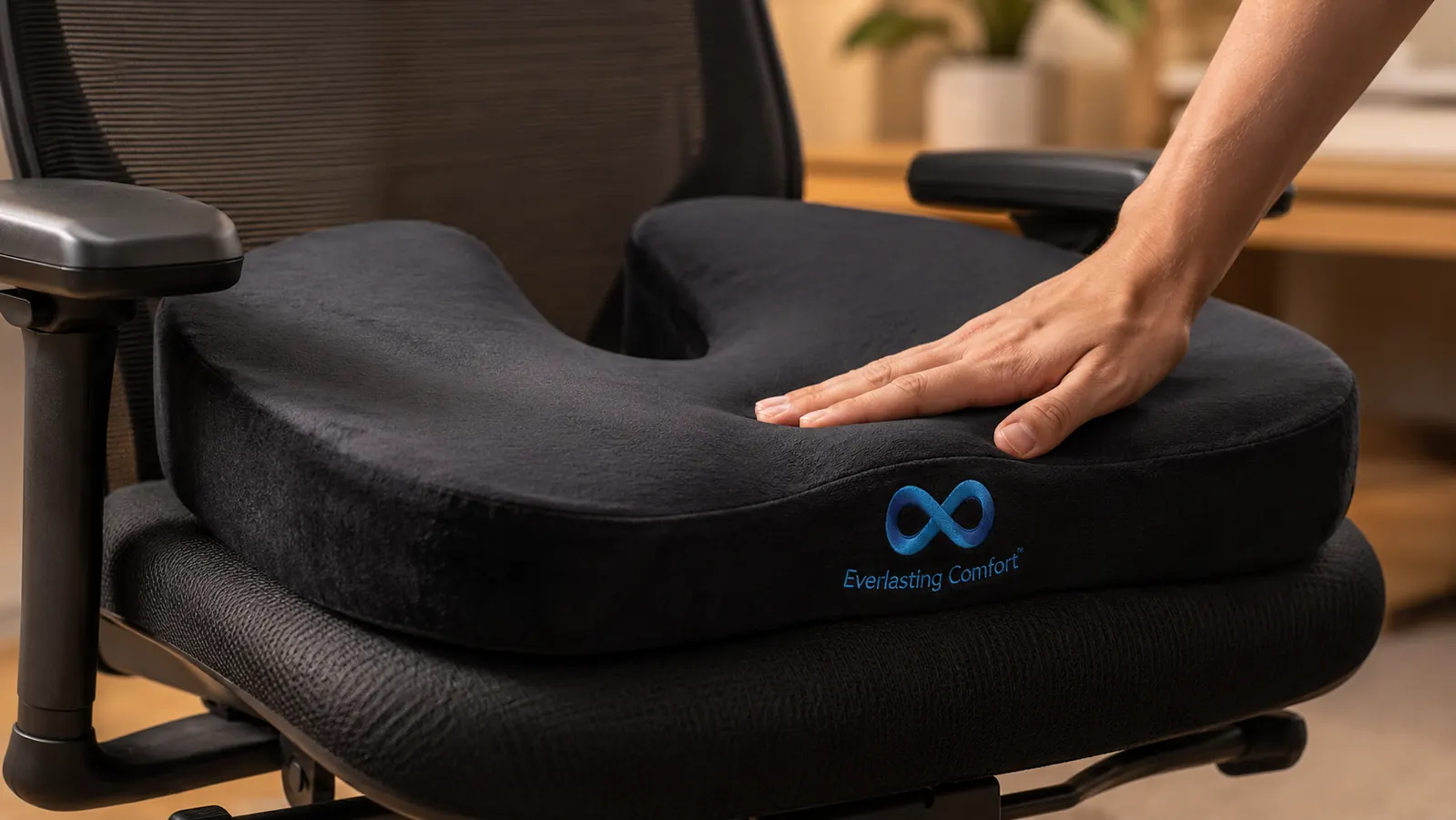
The foam itself is dense. When I pressed my palm into the center on day one, it took about three seconds to rebound. That is what you want in a cushion meant for long-duration sitting. Cheap foam bounces back in under a second and gives you a trampolining sensation that gets worse as the day goes on. Everlasting Comfort uses a higher-density material that compresses slowly and stays compressed under your weight, distributing pressure across the widest possible surface area instead of letting it concentrate at your tailbone and sit bones.
By week four I noticed the foam had settled by maybe ten percent. It felt slightly flatter than day one, but still meaningfully softer than my bare chair. I checked this again at the 60-day mark. The same. No dramatic compression collapse, no flat spots, no smell (some reviewers mentioned a foam smell at unboxing, which I had for about two days and then it was gone). If you are worried about the cushion going flat in a month the way cheaper foam products do, that concern did not materialize for me.
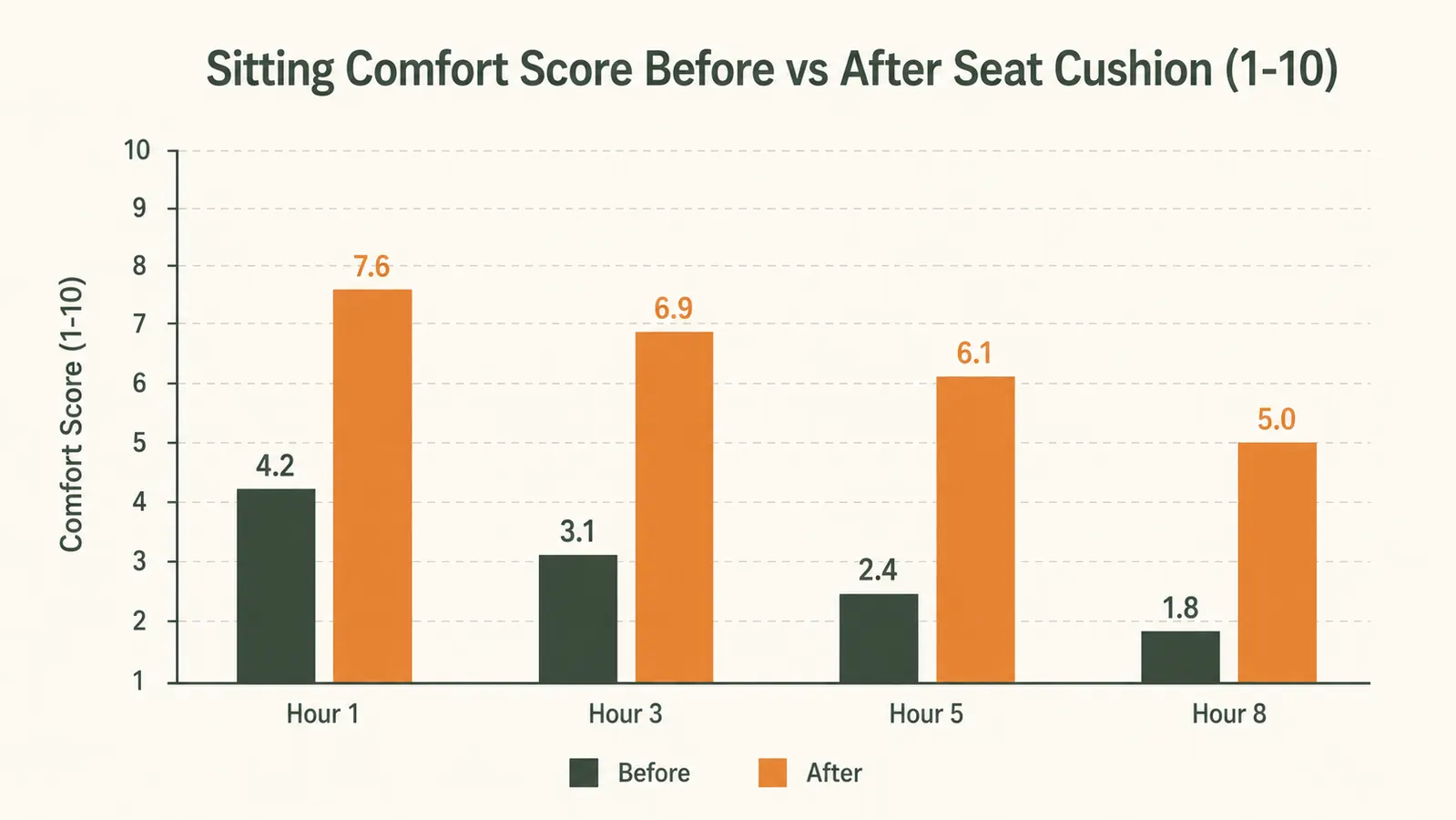
By week two, I stopped setting a timer to get up every 45 minutes. I was just working, and the pressure reminder never came.
The Coccyx Cutout: Does That Design Actually Do Anything?
The rear U-shaped cutout is the most important design feature on this cushion and also the one most people overlook when they compare cushions by price alone. When you sit on a flat surface, your coccyx (tailbone) bears direct downward load. That load increases when you lean slightly forward, which most desk workers do subconsciously when reading a monitor. The cutout positions your tailbone over an open space so it makes no contact with the foam at all. All load transfers to the fleshy parts of your glutes and upper thighs, which are designed to bear it.
After the first full day using the cushion I noticed I was not reaching back and adjusting my position every 20 minutes the way I had been doing for months. I had gotten so used to fidgeting that I did not even realize I was doing it until I stopped. That change was directly from the cutout, not just the foam. The foam makes it comfortable. The cutout makes it comfortable specifically for seated desk work where your spine stays vertical for hours at a time.
One honest note here: if your pain comes from your lower back rather than your tailbone, this cushion will help some but will not fix the root cause. For lower-back pain you also need lumbar support. The seat cushion handles the bottom half of the equation. I cover how these two things work together in my comparison article on memory foam seat cushions versus lumbar pillows if you want to read about stacking both.
Performance Over Time: Weeks 1 Through 8
Week one was the biggest change. The pressure relief was immediate and obvious. My get-up frequency dropped from roughly every 45 minutes to about once every 90 minutes in the first three days. By week two that extended to two hours between intentional breaks. I want to be careful here: I still got up regularly to walk around. But the urgency, the need to get up because my lower body was demanding relief, went away almost entirely in the first week.
Weeks three through six were steady. No dramatic improvement, no backslide. The cushion settled into its role as something I stopped noticing, which is a good sign for ergonomic products. You notice them most when they are missing. I took the cushion off the chair one afternoon in week five to clean the chair seat and sat at my desk for two hours without it. By the 90-minute mark the familiar ache was back. I put the cushion back on and it went away. That test was more convincing than anything I could tell you in a review.
Week six included the airline seat test. I took the cushion on a three-hour flight and used it on the economy seat. The difference was significant enough that the person next to me asked what I was sitting on. I would not specifically recommend buying this cushion for travel, since it adds bulk to your bag, but it works in any seat that gives you tailbone or sit-bone pressure.
My wife tried it on her Steelcase Leap for two weeks at my request. Her verdict: barely noticeable improvement. The Leap already has a flexible seat pan that adjusts to your posture, so it is not giving up much to a flat memory foam cushion. That result makes sense. This cushion delivers the most value on chairs that lack built-in pressure relief, which is the majority of office chairs in the budget range.

Cover, Fit, and Cleaning
The cushion comes with a removable velvet cover. It zips off in about 30 seconds and goes straight in the washing machine. I washed mine at the four-week mark because I had spilled coffee nearby and was being cautious. The cover came out fine on a cold gentle cycle. The foam core underneath is not machine washable, but I spot-cleaned a small area with a damp cloth and it dried completely overnight with no odor.
The cushion fits most standard office chair seat pans. Mine measures about 17 by 14 inches and the cushion covered it completely with about a half-inch overhang at the front, which is fine. On a very wide chair seat, say 20 inches or more, the cushion might feel narrower than expected. The non-slip bottom strap kept it anchored on my chair once I started using it. Without the strap it migrated about two inches forward over the course of a full day.
What I Liked
- Immediate pressure relief at the tailbone and sit bones from day one
- Coccyx cutout design specifically addresses desk-sitting pain, not just general seat softness
- Dense memory foam held its shape well over 60 days with only minor compression settling
- Removable, machine-washable velvet cover
- Non-slip bottom strap keeps it in place once engaged
- Works on a wide range of chair types: mesh task chairs, dining chairs, car seats, airline seats
Where It Falls Short
- Does not add lumbar support, so lower-back pain requires a separate fix
- Shifts without the strap; takes a day or two to remember to use it
- Slight foam smell at unboxing that took two days to dissipate
- Limited value on high-end ergonomic chairs that already include pressure-relief features
- Foam will eventually compress more over months of daily use; replacement timeline unknown at 60 days
Who This Is For
This cushion is built for remote workers and home office users who sit six or more hours a day on a chair that was never designed for that kind of continuous use. That describes most people whose home office chair cost under $300 and was bought for looks or price rather than ergonomics. If you feel a dull ache or grinding pressure at your tailbone or sit bones by mid-afternoon, if you find yourself shifting positions every 20 to 30 minutes, or if you work with a coccyx injury or recent tailbone soreness, this is one of the most cost-effective fixes available before you start looking at a full chair replacement. I also recommend it for people who are about to spend $400 or more on a new chair. Try this first. It might buy you another two years out of what you already own. I have more detail on the tailbone pain side specifically in this guide: how to relieve tailbone pain from sitting at a home office desk all day.
Who Should Skip It
If your pain originates in your lower back rather than your seat, this cushion alone will not solve it. You need lumbar support to address the curvature of the lower spine, and a seat cushion only handles the base. Skip this product if you already own a premium ergonomic chair with a contoured seat pan or if your chair is highly adjustable and properly dialed in for your height and posture. The Steelcase test proved the diminishing returns clearly. Also skip it if you switch between multiple workstations throughout the day and do not want to carry the cushion between them. It is portable, but it adds a step to every setup.
Two months in, I would buy this again without hesitation if my current one wore out.
The Everlasting Comfort seat cushion is the single cheapest upgrade I made to my home office in the past year and the one I notice most when it is missing. Check the current price on Amazon and see if it is the right fix for your chair.
Amazon Check Today's Price on Amazon →